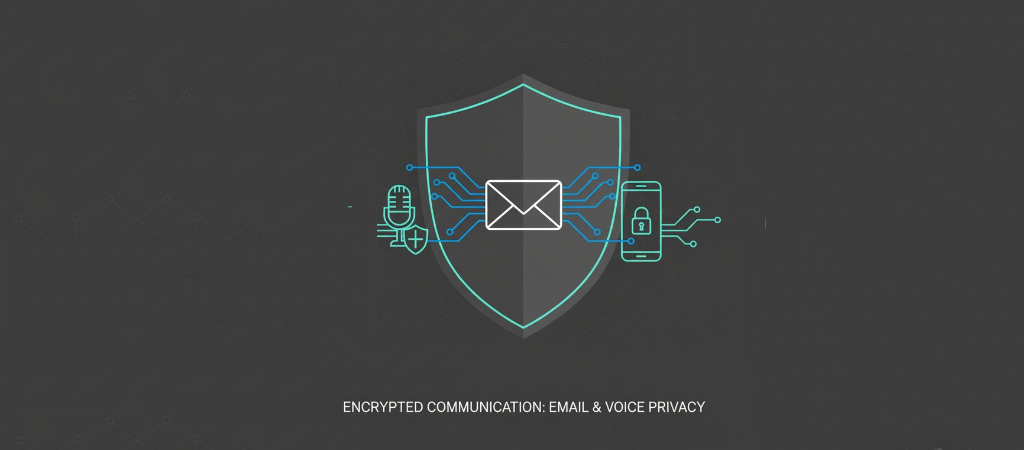
How to Keep Email and Voice Communication Private with Encryption
Privacy is no longer a luxury; it has become a necessity. Whether you are a business owner, IT administrator, legal professional, or marketing manager, the messages you send daily often contain sensitive information—client contracts, strategy documents, and even internal voice messages. Therefore, protecting your communications is crucial.
In this post, we’ll explore how to keep your email private through encryption and how to secure voice transmissions for business and team communications. Additionally, we’ll review the best tools available for encrypting both email and voice, so you can maintain complete control over your data.
Why You Need Encrypted Communication
When you send an unencrypted email or make a call over an unsecured channel, that information can be intercepted, copied, or even altered before it reaches its destination. Email and voice encryption prevent unauthorized access by coding messages, ensuring only the intended recipient can decode them. This safeguards your organization against:
- Data breaches and cyberattacks
- Phishing and identity theft
- Unauthorized access to business communications
- Legal and compliance risks
If your team manages private, financial, or legal data, encrypted communication is essential for safeguarding sensitive information.
How Email Encryption Works
Email encryption transforms your message into unreadable text, accessible only to recipients with the correct digital key. Here are the two main types of email encryption:
1. Transport Layer Security (TLS)
Encrypts emails while they travel between servers. Platforms like Gmail and Microsoft 365 use TLS by default.
2. End-to-End Encryption (E2EE)
Ensures only the sender and receiver can read the email — even your email provider can’t access it. For businesses, E2EE offers the highest level of protection and compliance with GDPR and HIPAA.
How Voice Encryption Works
Just like email, voice encryption protects spoken data during transmission. Secure VoIP platforms encrypt voice packets as they move over the internet. When you use an encrypted call service, your voice is converted into encrypted digital data, transmitted securely, and then decrypted by the receiver’s device.
This prevents interception during conference calls, sales meetings, and client discussions—making it ideal for teams that handle confidential communication.
Best Tools to Encrypt Email and Voice
Choosing the right tools depends on your team size, technical setup, and security needs. Below are trusted solutions for both email and voice encryption:
- Safe Mailer (Email Encryption): A user-friendly, secure email platform that integrates with Gmail and Outlook. It offers end-to-end encryption, message expiration, and data-loss prevention tools for businesses that need confidentiality without complexity.
- ProtonMail (Private Email Service):ProtonMail uses zero-access encryption, meaning even the provider can’t read your emails. It’s ideal for private email and messaging platforms that need global accessibility.
- Tutanota (Encrypted Business Email): A strong alternative to mainstream email services with built-in end-to-end encryption and secure calendar features.
- Signal (Secure Voice & Messaging): One of the best secure voice and email transmission solutions, Signal encrypts both voice and text communication. It’s open-source, easy to use, and trusted worldwide.
- Wire(Enterprise-Grade Encrypted Communication): Designed for businesses, Wire offers encrypted communication for sensitive data, combining text, file sharing, and voice calls with enterprise-level control and compliance.
- Silent Phone (Encrypted Voice Platform): Perfect for executives and legal teams, Silent Phone provides secure voice and video transmission with dynamic encryption keys that change every call.
How to Keep Email and Voice Communication Private
- Use end-to-end encryption whenever possible. TLS alone isn’t enough for sensitive data.
- Train employees to identify phishing and suspicious links.
- Enable two-factor authentication (2FA) on all communication apps.
- Encrypt attachments and voice recordings before sending.
- Update devices and software regularly to patch vulnerabilities.
Consistency is key — encryption is only effective when used across all communication channels.
The Future of Secure Messaging and Communication
As remote work and digital collaboration expand, the line between email, chat, and voice communication continues to blur. Businesses that take a forward-thinking approach to privacy are implementing unified encrypted communication platforms that cover all channels—email, calls, and file sharing—in one secure environment.
By combining private email services with voice encryption, teams can collaborate freely without worrying about leaks or breaches.
Final Takeaway
If your organization values trust, privacy, and compliance, it’s time to upgrade your communication security.
Start by encrypting your emails, securing your voice transmissions, and choosing tools that fit your workflow. Whether you use Safe Mailer, Signal, ProtonMail, or Wire, the goal is the same: to keep your data in your hands only.
Secure email and voice encryption isn’t just for IT teams—it’s for anyone who wants to protect business communication and client confidentiality.