A Simple Situation That Explains Everything
A company sends a confidential contract via email.
They believe it is secure because TLS encryption is enabled. But later, they discover the email was accessed from the recipient's server.
How did this happen? The email was protected during transit but not after delivery.
This is where the difference between TLS email security and end to end email encryption becomes critical.
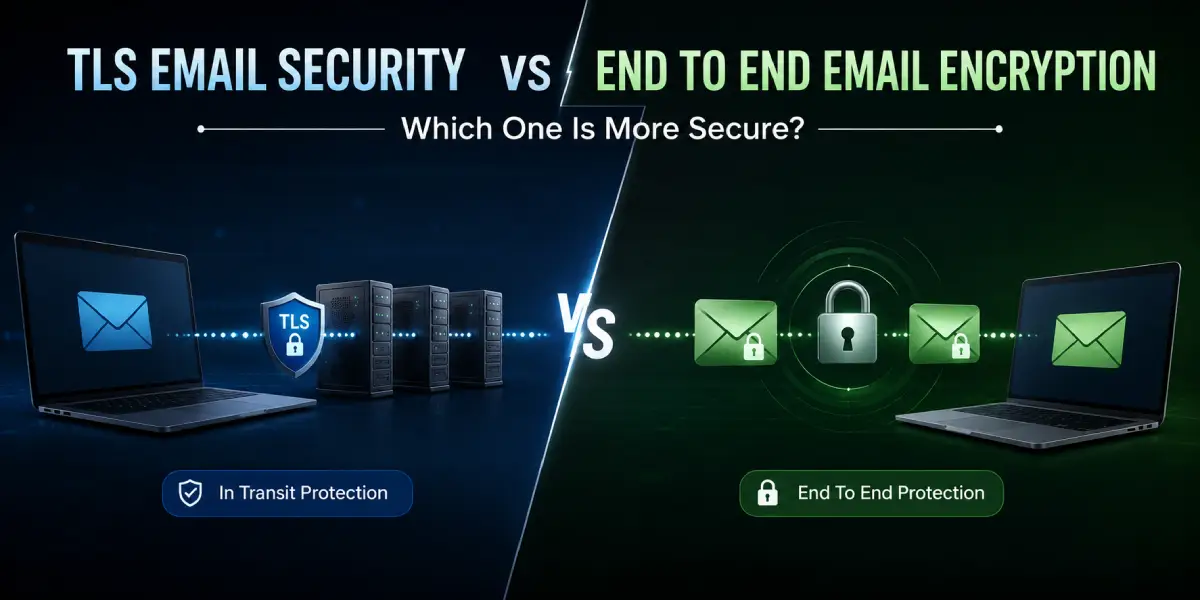
What Is TLS Email Security
TLS email security applies to emails in transit between email servers.
Once an email is sent, it goes through different servers to the recipient. This voyage is secured by TLS. It ensures that:
- Emails cannot be easily intercepted during transmission
- Communication between servers is encrypted
- Data is protected from network-based attacks
But after the email has been transferred to the destination server, TLS protection ends.
What Is End to End Email Encryption
End-to-end email encryption secures the email text between the sender and the recipient.
The message can be decoded, and only the recipient (intended) would read it. Content cannot even be accessed by email service providers. This means:
- Emails remain encrypted at all times
- Only authorized users can access data
- Sensitive information stays protected even after delivery
This renders end to end encryption one of the best means of communication protection.
Key Differences Between TLS and End-to-End Encryption
Scope of Protection
- TLS protects data in transit
- End-to-end encryption protects data at all times
Access to Email Content
- TLS allows servers to access email content
- End-to-end encryption restricts access to the sender and recipient only
Security Level
- TLS provides basic transport security
- End to end encryption provides advanced data protection
Use Case
- TLS is standard for general communication
- End to end encryption is essential for sensitive data
Real World Example Why TLS Alone Is Not Enough
A legal company exchanges confidential materials through regular email that is secured with TLS. The email is securely sent to the recipient's server.
However, the server is subsequently hacked. The email was not encrypted, so attackers had access to sensitive information. Had it been end-to-end encrypted, the information would have been unreadable.
This example demonstrates the need to offer more protection to businesses.
When Should Businesses Use TLS Email Security
TLS is suitable for:
- Basic email communication
- Non-sensitive data exchange
- Standard business operations
It offers a minimum tier of protection and is popular.
When Is End to End Email Encryption Necessary
When dealing with end to end encryption, it should be applied for:
- Financial data
- Legal documents
- Healthcare records
- Confidential business communication
- Personally identifiable information
In these applications a more robust protection is necessary.
The Role of Secure Email Platforms in Modern Security
Businesses require encryption protocols but not only this. They require the full security of communication. Secure email platforms provide:
- End-to-end encryption for sensitive data
- Secure file sharing for attachments
- Access control for communication
- Monitoring of email activity
Special built-in features such as Safemailer are solutions that integrate these features to offer all-around protection.
How Safemailer Enhances Email Security
Safemailer assists organizations to step up their protection beyond TLS.
- Encrypted communication ensures data is protected at all times
- Secure file sharing prevents unauthorized access
- Communication monitoring detects suspicious activity
- Compliance-ready systems support regulatory requirements
Safemailer allows businesses to enhance their email security policy and secure confidential communication.
Industries That Require Advanced Email Encryption
Any organization dealing with sensitive information should have strong encryption:
- Healthcare organizations protecting patient data
- Financial institutions managing transactions
- Government agencies handling confidential information
- Defense organizations securing critical data
- Educational institutions safeguarding records
These industries demand end-to-end encryption as a compliance and security measure.
Best Practices for Email Encryption Strategy
Companies must take a stratified approach.
- Use TLS for basic communication security
- Implement end-to-end encryption for sensitive data
- Train employees on secure communication practices
- Monitor email activity continuously
- Use secure email platforms for complete protection
This set would provide high level of protection against contemporary threats.
The Future of Email Security
Cyber threats are becoming more sophisticated, and so is email security. Future strategies will focus on:
- Zero trust communication models
- AI driven threat detection
- Integrated encryption systems
- Real time monitoring and response
Companies adopting high levels of encryption today will be in a better position to face challenges in the future.
Conclusion
TLS email security and end-to-end email encryption are designed to serve another purpose.
TLS is used to secure emails as they are sent, and end-to-end encryption secures the content being sent.
To modern businesses that deal with sensitive data, the two are significant although end to end encryption offers greater security.
Employing tools such as Safemailer assists organizations in establishing effective encryption practices and securing their communications against emerging threats. Today, the security of email solutions will guarantee safety and confidence in data over time.
Frequently Asked Questions
What is TLS email security?
TLS email security encrypts emails during transmission between servers to protect data from interception.
What is end-to-end email encryption?
End-to-end encryption ensures that only the sender and recipient can read email content.
Is TLS enough for email security?
TLS offers minimum security and fails to encrypt emails once they are sent.
When should businesses use end-to-end encryption?
Businesses should use it for sensitive data, such as financial records, healthcare information, and confidential communications.
How does Safemailer improve email security?
Safemailer provides secure file sharing, monitoring, and compliance-ready communication solutions with encryption.