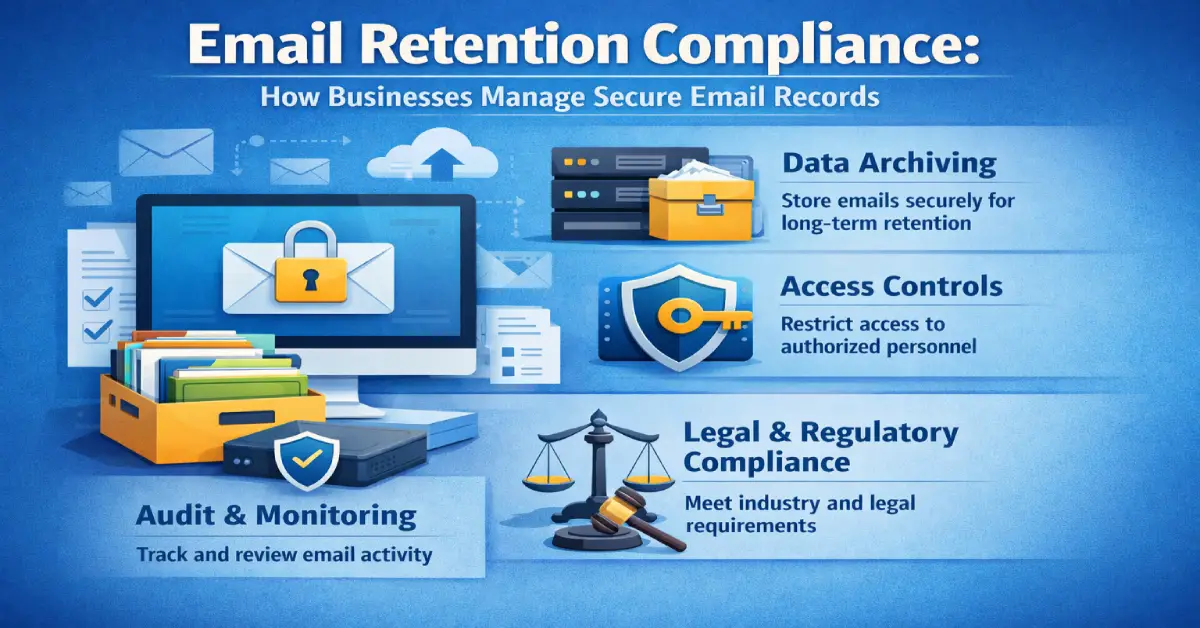
Why Email Record Management Matters for Businesses
The use of email is essential to day-to-day business activities. Email is used by organizations to share financial information and internal discussions, as well as confidential documents in terms of contracts.
Email habitually comprises sensitive information that businesses need to keep proper communication records. Lots of industries must legally retain email communication to be audited in regulatory enquiries and legal proceedings.
An email retention compliance will take care of the regulations and internal governance policies that will make sure that organizations store and manage email records safely and as required by the regulations.
In the absence of effective retention systems, the companies would run the risk of compliance violations, legal claims, or data loss in audits and investigations.
What Is Email Retention Compliance
Email retention compliance is the policies and technologies which are applied to store, preserve and manage the records of email communication, which meet the requirements of the regulations.
With these policies, there is an indication of the period the email records are supposed to be maintained, where they are supposed to be kept, and to whom they are to be provided.
Secure email retention typically includes:
- Long-term storage of email communication
- Secure archiving of attachments and documents
- Controlled access to stored email records
- Searchable audit logs for investigations
- Automated retention and deletion policies
Individual organizations use secure communication channels such as SafeMailer to guarantee encrypted records of email communication and still remain within the confines of the regulatory systems.
Why Businesses Need Secure Email Archiving
Secure email archiving allows companies to have a record of communication and keeps them safe against counterfeiting and misuse.
Emails are archived through systems with secure environments where the records can be viewed during audit investigations or verification of compliance. Secure email archiving helps organizations:
- Preserve communication history
- Protect confidential information
- Support regulatory compliance requirements
- Maintain evidence for legal discovery
- Prevent accidental deletion of important records
Companies that adopt secure archiving systems are able to handle communication logs effectively and, in addition, have a good command and control system.
Email Retention Policies for Businesses
An explicit email retention policy assists organizations in determining the manner in which the records of communication are stored, handled, and removed. An effective policy of retaining emails usually covers several important issues.
- Retention Duration: Organizations must define how long emails should be retained based on legal, regulatory, or operational requirements.
- Secure Storage: Email records should be stored in encrypted environments that protect sensitive information from unauthorized access.
- Access Control: Only authorized users should be able to access archived email communication.
- Automated Retention Management: Automated systems can enforce retention rules and delete records once retention periods expire.
- Audit and Monitoring: Maintaining detailed logs helps organizations track access to archived communication and maintain transparency.
These policy requirements are supported by solutions like SafeMailer, which have encrypted communication and secure email archiving capabilities.
How Email Retention Compliance Supports Security and Compliance
Email retention compliance is necessary among organizations that have to adhere to the stringent regulations. Best retention practices assist companies in showing responsibility and transparency in their communication practices. Benefits include:
- Improved compliance with regulatory standards
- Better visibility into communication records
- Protection against unauthorized access to archived data
- Support for legal investigations and audits
- Reduced risk of data loss or accidental deletion
Having well organized email retention systems would give an organization the ability to access records swiftly when they are needed by regulators, auditors or other legal authorities.
Industries That Require Strong Email Retention Compliance
The organizations within the regulated industries are to provide detailed documents of business communication. The compliance with email retention is especially significant to the industry that handles sensitive data.
- Healthcare organizations protecting patient communication
- Financial institutions maintaining transaction records
- Government agencies managing official communication
- Defense contractors handling controlled technical information
- Educational institutions safeguarding student data
These industries are assisted by using secure communication systems such as SafeMailer which offers encrypted email communication, secure archiving, and compliance-ready monitoring systems.
Best Practices for Implementing Email Retention Compliance
There are a few best practices that should be observed to ensure that organizations enhance their email records management.
- Identify Regulatory Requirements: Different industries must follow specific compliance standards related to communication retention.
- Implement Secure Email Archiving Systems: Encrypted archiving systems protect stored communication from unauthorized access.
- Establish Clear Retention Policies: The issue of email records should be properly established under retention policies.
- Monitor Archived Communication Access: Employees must know the way in which communication records are stored and handled.
- Train Employees on Communication Policies: Employees should understand how communication records are stored and managed.
These best practices are supported by the use of secure email communication and archiving solutions such as SafeMailer. You can also explore our guide on secure email audit trails for further insight.
The Future of Secure Email Record Management
The requirement of a safe email retention system will increase as organizations embrace digital communication even more. Future email retention technologies are likely to include:
- Artificial intelligence based compliance monitoring
- Automated policy enforcement systems
- Enhanced encryption for archived communication
- Advanced search capabilities for legal investigations
- Real time monitoring of communication access
The companies investing in safe communication systems nowadays will be in a better position to cope with future compliance issues and security roadblocks.
Conclusion
The compliance with email retention is critical to the organization that has to control the records of safe communication and fulfill the requirements of the regulations.
With secure email archiving solutions in place and a proper policy of retention and access controls, businesses are able to secure sensitive communication and ensure the business remains in line with industry regulations.
Secure communication systems such as SafeMailer are used to maintain communication systems that are transparent and ready to comply with organizations by storing encrypted email records that can track communication activity. By using powerful email retention practices, organizations can increase their level of security, protecting sensitive data and ensuring credibility to the regulators, partners, and customers.
Frequently Asked Questions
What is email retention compliance?
Email retention compliance implies a mechanism of safe keeping and management of email communication records based on legal, regulatory, and organizational policies.
Why is secure email archiving important for businesses?
Secure email archiving ensures that communication records are preserved, protected from unauthorized access, and available for compliance audits or legal investigations.
What are email retention policies for businesses?
Email retention policies define how long email records should be stored, where they should be archived, and who is allowed to access them.
How long should businesses retain email records?
Retention periods depend on industry regulations, legal requirements, and internal governance policies.
Which industries require email retention compliance?
Industries such as healthcare, finance, government, defense, and education must maintain secure email records to comply with regulatory standards.