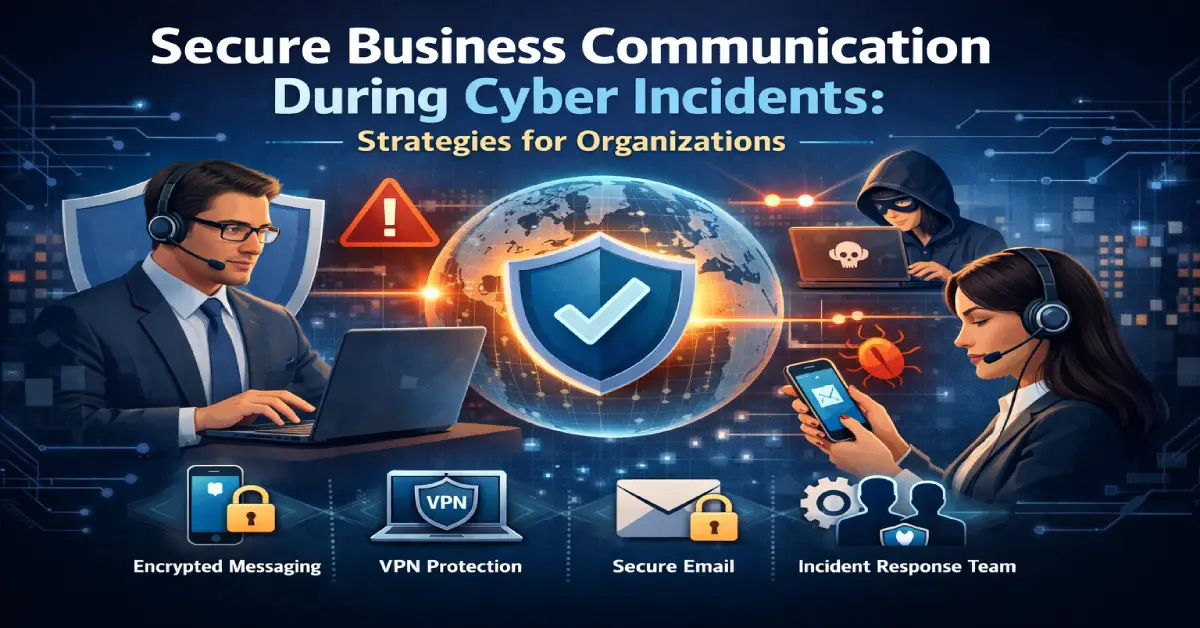
Companies that operate on secure communication systems such as SafeMailer are able to sustain secure cooperation and avoid information leakage in case of a security breach. This is why zero trust email security and encrypted communication channels are essential for modern organizations.
Why Secure Communication Becomes Critical During Cyber Incidents
Imagine this scenario. Late one night, a financial company notices something suspicious going on within its network. Security teams suspect a ransomware attack and initiate investigations. While the technical team isolates affected systems, the leadership team needs to coordinate actions with employees, legal teams and external partners.
But there is a problem. Their internal communication systems may already be compromised.
If attackers are monitoring emails or internal messaging platforms, sensitive response discussions could be exposed.
This scenario explains why it is important to safeguard business communication in cases of cyber attacks. The organizations need to have secure communication channels that can enable the teams to communicate safely even when there is a security breach.
Understanding Cyber Incident Management
Cyber incident management is a process through which organizations go about detecting, responding and recovering from cybersecurity incidents. These incidents may include:
- Ransomware attacks
- Data breaches
- Phishing campaigns
- Unauthorized system access
- Malware infections
In such events, organizations need to arrange themselves in a very short time and at the same time secure confidential information. A successful response strategy is based on communication. Lack of safe communication means that attackers can overhear incident response deliberations or have more access to sensitive information.
What Is Incident Response Communication
Incident response communication consists of formal information sharing between security teams and company executives and legal teams and outside parties during cybersecurity emergencies. Effective incident response communication ensures that:
- Security teams share threat intelligence quickly
- Leadership teams make informed decisions
- Employees receive accurate instructions
- Regulatory obligations are met
Organizations maintain control through secure communication systems that block attackers from accessing response discussions.
Real Example: How Communication Failures Can Worsen Cyber Incidents
Consider a healthcare organization facing a phishing attack that compromises several employee accounts. Security teams start their investigation, but they continue to share their discovery of confidential information through the email system, which attackers have already breached.
The attackers obtained knowledge of the investigation because of this security breach, which allowed them to modify their operational methods. The system remains compromised for an extended period, which results in further data theft.
The security team could have conducted safe operations through encrypted communication channels, which would have protected their confidential data from exposure.
Key Risks When Communication Is Not Secure
During cyber incidents, communication vulnerabilities can lead to additional damage. Some of the most common risks include:
- Reveal of investigation facts
- Unauthorized access to sensitive data
- Leakage of customer information
- Manipulation of internal instructions
- Reputational damage
Companies should therefore adopt secure communication systems that are not affected by primary systems even when they are compromised.
Building a Cyber Incident Response Plan for Communication
A strong cyber incident response plan should always include secure communication protocols. Organizations should prepare for incidents before they occur:
- Define Secure Communication Channels: Security teams must know which tools to use for secure communication during an incident. Encrypted email platforms like SafeMailer provide protected communication channels that help organizations maintain secure coordination.
- Identify Communication Roles: Different teams should have clearly defined responsibilities. Security teams investigate the incident, executives coordinate strategic decisions, legal teams evaluate regulatory obligations, and communication teams handle public messaging.
- Establish Escalation Procedures: The organization should determine when and how incidents are communicated to leadership teams, regulators, or partners.
- Maintain Secure Documentation: The logs and communications of incident reports should be safely kept to facilitate investigations and compliance needs.
How Secure Email Supports Incident Response Communication
Email is a widely used communication channel in business operations. Secure email systems are crucial during cyber incidents. Secure email platforms provide several advantages:
- Encrypted communication that protects sensitive messages
- Secure file sharing for investigation reports
- Access control for confidential discussions
- Activity monitoring for communication tracking
SafeMailer is one of the platforms that assists organizations in preserving secure communication even in times when cyberattacks are active. Read our guide on secure email audit trails to understand how activity monitoring supports incident response.
Industries That Require Secure Incident Communication
In the case of sensitive data, organizations should apply powerful communication security in case of an incident. Industries that benefit most include:
- Healthcare organizations protecting patient records
- Financial institutions securing financial transactions
- Government agencies managing classified information
- Defense contractors protecting technical data
- Educational institutions safeguarding student records
These industries can use secure communication platforms to ensure a sense of security in operations and compliance with the requirements.
Best Practices for Secure Communication During Cyber Incidents
There are best practices that organizations can adhere to in order to enhance response communication about incidents:
- Implement encrypted communication systems
- Limit access to incident response discussions
- Monitor communication activity for suspicious behavior
- Use secure file sharing for sensitive documents
- Train employees on incident communication protocols
Integration of these practices and sound communication technology assists companies in mitigating cyber attacks.
The Role of SafeMailer in Secure Incident Communication
In the event of cyber attacks, organizations need to use communication systems that are not breached by malicious individuals. SafeMailer offers secure communication features that assist the organization in keeping safe cooperation in the event of security breaches:
- Encrypted email communication protects sensitive discussions
- Secure file sharing prevents unauthorized document access
- Communication monitoring helps track message activity
- Compliance-ready communication supports regulatory requirements
Through the incorporation of secure communication tools such as SafeMailer, organizations will be able to reinforce their cyber incident response programs and minimise the risk of data exposure.
Conclusion
The number and sophistication of cyber attacks are on the rise. In case a security event takes place, organizations are forced to organize promptly while preserving confidential data.
Secure business communication would allow the executives of security teams and employees to work safely during the incident and not expose crucial information.
Services such as SafeMailer are a secure infrastructure that companies can use in case of a high-risk cybersecurity incident. Secure communication is an investment that organizations should make today to make sure that their operations will remain resilient in future cases of cyber attacks.
Frequently Asked Questions
What is secure business communication during cyber incidents?
Secure business communication refers to protected communication channels used by organizations to coordinate responses during cybersecurity incidents.
Why is communication important during cyber incident response?
Communication allows security teams, leadership and stakeholders to share critical information and coordinate response actions quickly.
What is incident response communication?
Incident response communication is the structured exchange of information between teams during cybersecurity investigations and response efforts.
How does encrypted email help during cyber incidents?
Encrypted email protects sensitive messages and investigation details from unauthorized access during security incidents.
What should a cyber incident response plan include?
A cyber incident response plan should include communication protocols, escalation procedures, secure documentation, and defined team responsibilities.