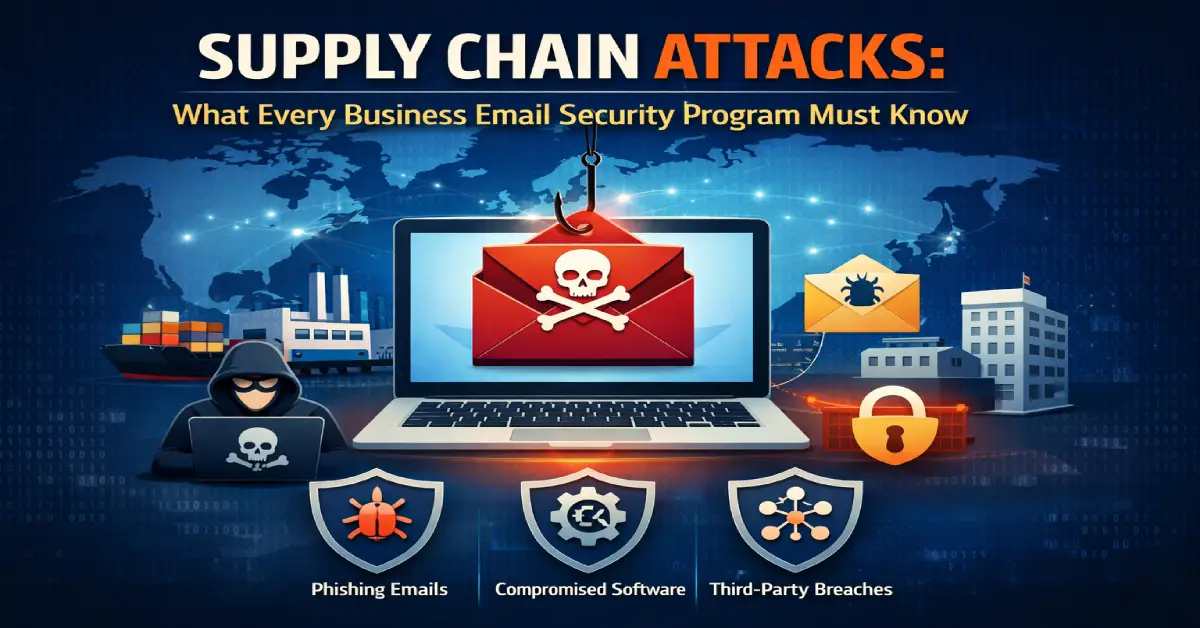
Attackers no longer break systems directly , they exploit trust between businesses, making email the easiest entry point. Solutions like SafeMailer assist companies in securing business communication with suppliers and partners through encrypted channels and activity monitoring.
Why Supply Chain Attacks Are Rising Faster Than Ever
A procurement manager receives an email from a trusted vendor with updated bank details. Everything looks normal. The logo is correct. The email tone matches previous conversations.
The payment is processed. Days later, the company realised the email was fraudulent.
This is how modern supply chain attacks work. Attackers no longer break systems directly. They exploit trust between businesses. Email becomes the easiest way in.
What Are Supply Chain Attacks
Supply chain attacks occur when cybercriminals target an organization through its vendors, partners, or service providers. Instead of attacking a company directly, attackers compromise a third party and use that access to infiltrate the main organization.
These attacks often rely on:
- Trusted communication channels
- Existing business relationships
- Weak vendor security practices
Because emails from vendors are expected and trusted, they are less likely to be questioned.
Understanding Vendor Email Compromise
Vendor email compromise is one of the most dangerous forms of supply chain attacks. In this attack method, cybercriminals gain access to a vendor email account or impersonate it convincingly.
They then send emails that appear legitimate to:
- Request payments
- Share malicious attachments
- Change banking details
- Steal sensitive business information
Because these emails come from trusted sources, employees often act without suspicion.
Why Email Is the Primary Attack Vector
Email is deeply embedded in business operations. It is used for approvals, invoices, document sharing and communication with vendors. This makes it a high-value target for attackers.
Key reasons include:
- High trust in known senders
- Frequent exchange of financial and sensitive data
- Limited verification of routine communication
- Human tendency to act quickly on familiar requests
Organizations that lack robust email security measures are therefore susceptible.
Common Types of Supply Chain Email Attacks
- Invoice Fraud: Attackers issue counterfeit invoices that seem to be issued by the vendors.
- Payment Redirection: Banking details are changed through email communication to redirect payments.
- Malware Distribution: Malicious attachments are shared through compromised vendor emails.
- Credential Phishing: False email messages purportedly from vendors are used to deceive employees into providing their login credentials.
Warning Signs Businesses Should Never Ignore
Even well-made attacks have little traces. Employees should be trained to identify:
- Sudden changes in payment details
- Urgent or unusual requests
- Slight variations in email addresses
- Unexpected attachments or links
- Changes in communication tone
Early detection of such signs can avoid losses of finances and data.
How to Protect Against Supply Chain Attacks
- Verify Vendor Requests: Validate sensitive requests, like payment changes, always by means of secondary communication channels.
- Implement Email Security Controls: Use advanced email filtering and threat detection systems to identify suspicious messages.
- Use Encrypted Communication: Secure email platforms ensure that communication cannot be easily intercepted or altered.
- Monitor Communication Activity: Track email interactions and detect unusual behaviour patterns.
- Limit Access to Sensitive Data: Restrict employee access to information they do not need for their role.
The Role of Secure Email in Preventing Vendor Email Compromise
Secure email systems are important in the protection against attacks on supply chains. They provide:
- Encrypted communication for sensitive exchanges
- Secure file sharing for vendor documents
- Authentication mechanisms to verify sender identity
- Activity tracking for communication monitoring
Solutions such as SafeMailer are used by organizations to ensure that there is a secure communication line between the organization and the vendor and also to minimize chances of compromise.
Real Example: How Secure Communication Prevents Loss
A vendor sends out an update request on payment to a manufacturing company. Instead of processing immediately, the finance team uses a secure communication platform to verify the request.
The vendor confirms that no such change was requested.
The company avoids a major financial loss. This is an illustration of the role of secure communication and verification in avoiding attacks.
Supply Chain Security for High Risk Industries
Supply chain attacks are more dangerous to industries that deal with sensitive data:
- Healthcare organizations managing patient data
- Financial institutions handling transactions
- Government agencies working with contractors
- Defense organizations managing critical systems
- Educational institutions collaborating with vendors
These industries should have effective email security and vendor communication measures. Explore our compliance resources to understand specific regulatory requirements.
Building a Resilient Email Security Program
Organizations should enhance their email security plan to guard against attacks on the supply chain:
- Train employees to recognize threats
- Implement secure email gateways and monitoring tools
- Use encrypted communication platforms
- Regularly audit vendor communication processes
- Maintain compliance with security standards
These factors put together provide a good safeguard against contemporary cyberattacks. Read our guide on secure email gateways for additional protection layers.
Why SafeMailer Is Critical for Secure Vendor Communication
SafeMailer assists companies in gaining secure business communication with suppliers and partners:
- Encrypted email protects sensitive conversations
- Secure file sharing prevents unauthorized access
- Communication monitoring detects suspicious activity
- Compliance-ready systems support regulatory requirements
Through SafeMailer organizations will be able to mitigate the threat of vendor email compromise and improve the security of the supply chain.
Conclusion
Supply chain attacks are no longer rare. They are one of the fastest-growing cybersecurity threats facing businesses today. By exploiting trust between organizations, attackers can bypass traditional defenses and cause significant damage.
A strong email security program combined with employee awareness and secure communication tools is essential.
Solutions like SafeMailer enable organizations to protect vendor communication, prevent fraud, and maintain secure business operations. Investing in supply chain security today ensures long-term protection against evolving cyber threats.
Frequently Asked Questions
What are supply chain attacks?
Supply chain attacks target organizations through vendors or partners to gain unauthorized access or steal sensitive data.
What is vendor email compromise?
Vendor email compromise occurs when attackers hijack or impersonate vendor email accounts to send fraudulent messages.
Why are supply chain attacks dangerous?
They exploit trusted relationships, making them harder to detect and more likely to succeed.
How can businesses prevent vendor email compromise?
Businesses can verify requests, use secure email systems, monitor communication, and train employees to detect threats.
How does secure email help prevent supply chain attacks?
Secure email platforms protect communication through encryption, authentication, and activity monitoring.